
A Winding Path to Medicine
From studying Asian studies, to spending more than two decades in software product management, Chris Stark’s path to medicine was full of twists and turns… but landed him in the exact right place.
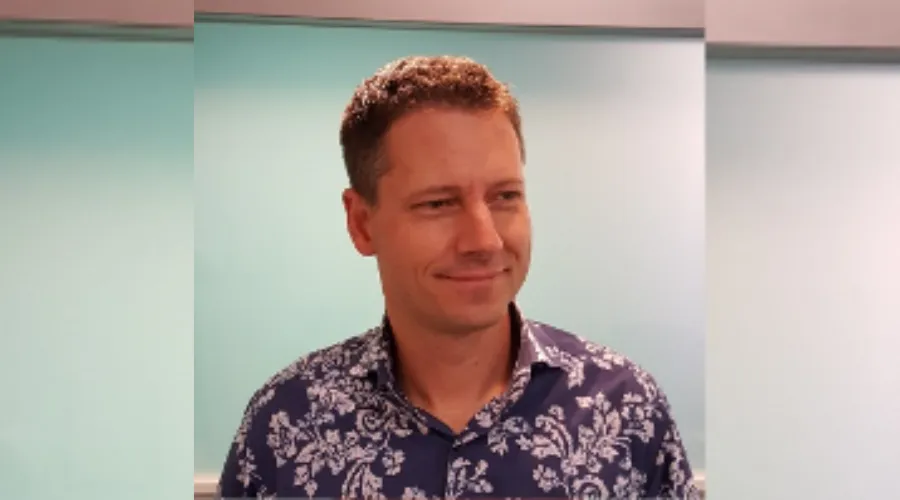
Chris Stark’s path to medicine was anything but conventional. From his undergraduate studies, through two-plus decades working in software product management, Stark stayed curious and kept searching for new passions. Now preparing to apply to medical school, he shares how the warmth of the Columbia community proved to be the best asset, and why he still believes in the power of following your own tune.
Tell us about your path to GS.
My undergraduate degree was Asian studies, chosen simply because I was just exploring the world and really hadn’t an idea what to do in life. After undergrad, I bounced around, taking risks to try new things and test my comfort zones. There were a diverse set of choices, sideroads, and failures along the way, but somehow that added up to a 25-year career in software product management, most of it spent in online advertising. It all looks more planned in hindsight than it felt at the time.
Being a product manager, especially in a startup and with a subsequent acquisition into a Fortune 500, was invaluable for learning about how big organizations work, as well as dealing with massive systems and complex environments. Putting in the time and feeling like I was mastering something gave me so much confidence that I could make changes in bigger things. Most importantly, it really helped me to recognize and be grateful for all things that allowed me to take the journey that brought me to Columbia, and the opportunity to continue the journey ahead of me.
What has been your proudest accomplishment at Columbia?
I think the conclusion of my Orgo/Bio year was one of the most rigorous academic years I've ever had, and simultaneously, one of the most fulfilling. Never have I been so challenged and learned so much, so fast.
Who are some people who have contributed the most to your Columbia experience?
It often takes a village, and the village at Columbia has been an invaluable source of positivity and support. I've been so fortunate that the cohort I started with (Spring 2023) was especially friendly. They immediately offered a big batch of friendly faces in all my classes, making my restart as a student so easy. It has literally set the tone for my whole Columbia experience, and that cannot be overstated.
"Knowing how so many older nontraditional students are tackling this space is inspirational!"
The GS “elders” club was another group who cheered one another on through difficult times and represented others with similar nontraditional challenges and concerns. Knowing how so many older nontraditional students are tackling this space is inspirational!
What are your plans for after graduation?
Obviously, all this centers around medical school. I'll be working towards that, but I look forward to being able to spend a little more quality time with my family. This coming summer, one of my kids is going on a tour in Korea with his taekwondo school, and I'm joining him in hopes of eating my way around the country.
What advice would you give to a student who's about to start their GS journey?
This is intended particularly for Postbac Premed students, but could be generalized to anyone at GS: I think there's a lot to be said for taking a little more time to get through the program than you think you need or want.
The path to medicine is long. Being a Postbac can feel like you're just stopping here on the way to something else. Each of us has different needs and resources that will dictate how long Postbac lasts, but try to give yourself a little time and not rush to the next stage. In the grand scheme, a year or two isn't really going to matter. By contrast, trying to get it all done can be particularly stressful with all the factors of life (expected and unplanned), and that can have much more profound long term effects.