
Celebrating Innovation and Curiosity: GS Students Present at Columbia’s Undergraduate Research Symposium
A record 47 GS researchers presented their work at this year’s Undergraduate Research Symposium, across fields including political science, STEM, history, and law.
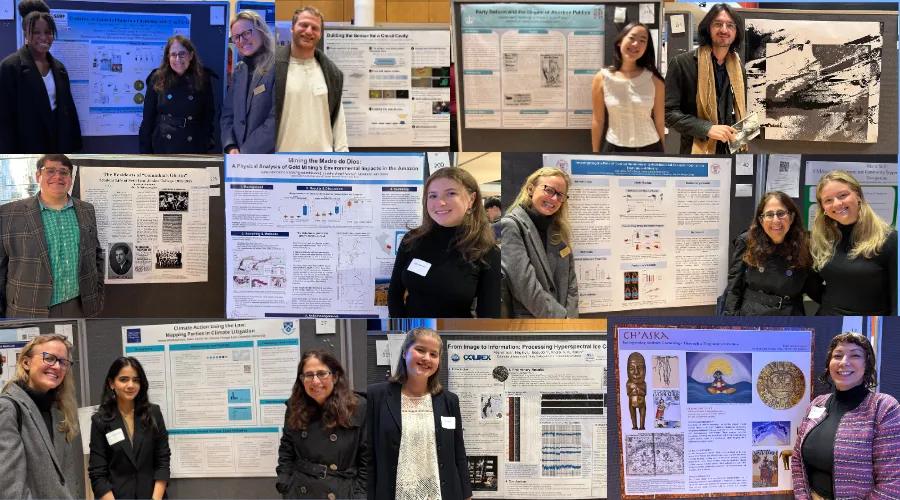
On Friday, October 23, Columbia held its annual Undergraduate Research Symposium in Roone Arledge Auditorium, where students from all four undergraduate colleges presented research in any discipline to peers, faculty, and families. This year, a record 47 Columbia GS students presented their work to the wider university community. Event attendees toured the posters, spoke with researchers, and voted for their favorite poster design.
The symposium is both a chance for students to explain their work to visitors outside their field and to mark their achievements. “The symposium provides a wonderful opportunity for our students to showcase their hard work, engage in meaningful academic conversations, and celebrate their accomplishments as undergraduate researchers,” said Jie (Jenny) Li, GS Senior Assistant Dean for Academic Affairs. “I am incredibly proud of their dedication, intellectual curiosity, and contributions to Columbia’s vibrant research community,” she added.
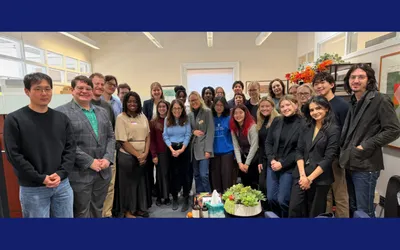
At the GS breakfast before the symposium, Caroline Marvin ‘16GSAS, Dean of Academic Affairs, recollected the early years of the symposium when there were only 7 GS researchers. This year, as the largest group of student researchers to date squeezed in for a photo, it was clear how much the School’s research contingent had grown.
Celeste Wang ‘28GS, a political science and economics major, received an honorable mention for her poster on Party Reform and the Origins of Abortion Politics. Reflecting on her symposium experience, she said: “I had the opportunity to speak with visitors of varying backgrounds and familiarities with my research field, and was even able to learn more about my own project through other parents and students.”
Kehinde Adekunle ‘28GS, a sociology and premed student, presented research on the evolution of lambda phage in a chemostat with E. coli K-12. “Presenting at the symposium showed me how easy it is to get integrated into the Columbia community and contribute your ideas,” she said.
Adekunle transferred to GS from Queensboro Community College. “I did my research at a different school, but the Columbia community welcomed it. It showed me how much the school celebrates innovation, whether it happens within the school or not,” she said.
When asked why other students should engage in research, she added: “Research exposes you to things that build you up. Because it's so niche, it makes you an expert in your topic. It’s the easiest way to build expertise, keep learning and contributing in a field, and have fun while doing it!”