
Presenting the Spring 2026 Bancroft Research Scholars
Congratulations to the newest cohort of scholars who are participating in exciting, funded research with Columbia faculty this fall.
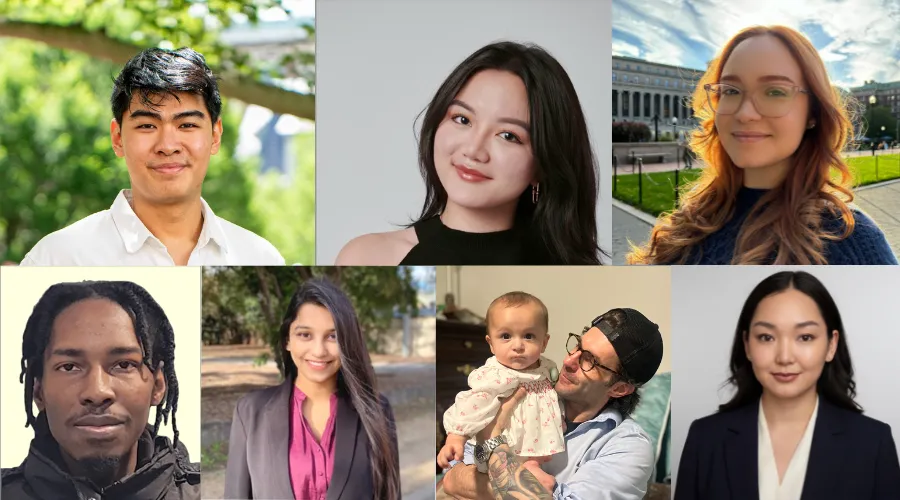
GS is proud to announce the seven Spring ‘26 Bancroft Research Scholars:
Yu Duo Xu ‘27GS, Uriel Dante Benymon ‘26GS, Maria Laura Melillo Sanchez ‘26GS, Nomin Khurelchuluun ‘26GS, Patrick Philip Johnson ‘26GS, Debpriya Das ‘28GS, and Glenn Paul ‘27GS.
Senior Assistant Dean of Academic Affairs Jenny Li shared: "Selecting this year’s Bancroft scholars was both exciting and challenging due to the exceptional quality of proposals we received. The seven scholars chosen represent the best of GS research, with projects spanning a wide range of disciplines—curious, driven, and deeply engaged in work that has the potential to shape conversations and create impact well beyond the classroom."
This year’s scholars exemplify that breadth. Maria Laura Melillo Sanchez ‘26GS, a cognitive science and anthropology major, is investigating how misinformation load affects belief and memory. Drawn to the study of communication breakdowns, she explained, “Misinformation was a topic that fit within my interests and that I saw a pressing need for research currently.” For Melillo Sanchez, being able to design and conduct her own study is a “priceless opportunity,” she said. “The fact that I get to pursue my curiosity while being supported and mentored by incredible faculty is everything to me.”
Meanwhile, Nomin Khurelchuluun ‘26GS, a data science major, is looking at the impacts of livestock on the environment in Mongolia. Growing up in Mongolia, Khurelchuluun described how, “Many families depend on healthy grasslands and forests for herding and local livelihoods, and in recent years increasing livestock numbers and climate pressures have placed growing strain on these ecosystems.” As a Bancroft Scholar, Khurelchuluun hopes to find “how livestock density relates to vegetation health and forest cover across different regions of the country.” To Khurelchuluun, this project is more than just research, but rather a way to “combine my personal connection to Mongolia with my academic interests.”
The Bancroft Research Scholars Program provides GS students with opportunities and funding to engage in research alongside esteemed Columbia faculty. This semester’s cohort is working on a variety of projects, from machine learning to sauna sociology to heart cells. Hear from this semester’s scholars about their cutting-edge research and how the Bancroft Research Scholars Program creates essential opportunities for GS students!
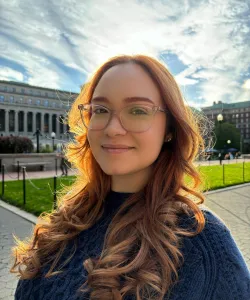
Maria Laura Melillo Sanchez ‘26GS
Major: Cognitive Science & Anthropology
Project: Understanding the Effects of Misinformation Load on Belief and Memory
What led you to pursue your current research topic?
As a cognitive science major specializing in social cognition, I was always interested in human communication. Particularly, I was drawn to all the ways we, as humans, fail to communicate. Misinformation was a topic that fit within my interests and that I saw a pressing need for research currently. I was beyond lucky that Columbia has in its faculty some of the most active and involved researchers on misinformation and that they were willing to mentor me.
How will this research help you in advancing your academic and career goals?
I have known for a while that I wanted to do research professionally if possible. It was the reason I applied to a R1 University like Columbia. Having the experience of conducting my own research from the conceptual level, building my own theoretical framework, and being involved in the experimental process is a priceless opportunity. The fact that I get to pursue my curiosity while being supported and mentored by incredible faculty is everything to me. It is the difference between saying “I want to pursue a PhD in the future” to “I will be doing a PhD in the future.”

Yu Duo Xu ‘27GS
Major: Political Science & Human Rights
Project: Balancing Liberty and Security: Democratic Responses to Terrorism in Comparative Perspective
What led you to pursue your current research topic?
I’ve long been interested in how democracies uphold their core values under pressure. Terrorist attacks create moments when governments must act quickly, often expanding executive power and limiting civil liberties in the name of security. What struck me is that democracies with similar legal commitments respond very differently to these crises. I wanted to understand why—whether those differences stem from constitutional structures, political culture, or international norms—and what that reveals about how liberty and human rights are protected or compromised during emergencies.
How will this research help you in advancing your academic and career goals?
This project represents my first opportunity to conduct independent, faculty-supervised research at the intersection of law, international relations, and public policy. It is helping me develop the analytical and methodological skills I will need for graduate study and a future career in policy research or law, focused on democratic governance. More broadly, it reinforces my belief that careful, comparative research can inform better policy choices, ones that strengthen security while preserving the rights and freedoms that define democratic societies.
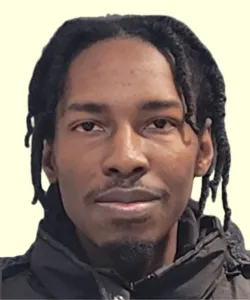
Uriel Dante Benymon ‘26GS
Major: Information Science, Minor: Mathematics
Project: Bridging Machine Learning and Medicine: Predicting Hypertension for Heart Disease Prevention
What led you to pursue your current research topic?
During Professor Salleb-Aouissi's artificial intelligence course at Columbia, I became compelled to explore deeper into the interdisciplinary domain of machine learning (ML) and biomedical informatics through her instruction. My Bancroft-funded research in the Department of Computer Science explores how AI and ML can be used to mine biomedical data for clinical insights through the context of cardiovascular risks. Centered on data mining within public health datasets, the project investigates how everyday behavioral and lifestyle patterns correlate with hypertension, a leading predictor of heart disease. By combining ML research with biomedical informatics and computational medicine, this project aims to develop models that can move beyond black-box prediction toward interpretable and explainable findings that clinicians, researchers, and patients can analyze and use. Furthermore, this project seeks to comprehend why certain patterns emerge, using explainable AI (XAI) and interpretable ML techniques to investigate and identify variables that contribute most strongly to the influence of adverse cardiovascular anomalies. This allows the research to remain adaptable as methods evolve while preserving its core aim, which is translating large-scale health data into insights that support preventative medicine and evidence-based decision-making.
How will this research help you in advancing your academic and career goals?
The Bancroft Research Scholars Program provides me with the intellectual and material space to investigate the intersection of computation and medicine with the methodical and studious care that it demands. After Professor Salleb-Aouissi’s AI course, I became even more intrigued by how AI and ML could extend beyond theoretical models and into domains that shape human life, especially in healthcare and biology. The support from this research program allows me to engage this work as a sustained line of inquiry, one that prepares me for advanced graduate training and research-driven careers in the future. As someone preparing for an MS and ultimately a PhD, I see this project as foundational. In addition, it enables me to develop greater fluency in ML research, biomedical informatics, and the ethical and practical challenges of utilizing ML in the field of medicine. Complementarily, this research program also gives me the opportunity to contribute to a collective of research that values both technical depth and social impact, which aligns my academic trajectory with the kind of interdisciplinary scholarship I would like to continue at the graduate level and beyond.
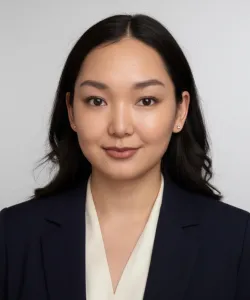
Nomin Khurelchuluun ‘26GS
Major: Data Science
Project: Assessing How Excessive Livestock Density Drives Land Degradation and Deforestation Across Mongolia
What led you to pursue your current research topic?
I was motivated to pursue this research because I grew up in Mongolia, where environmental change is something people experience directly in their everyday lives. Many families depend on healthy grasslands and forests for herding and local livelihoods, and in recent years increasing livestock numbers and climate pressures have placed growing strain on these ecosystems. Through my studies in data science at Columbia, I became interested in how open data and satellite imagery can be used to better understand environmental challenges. This project allows me to combine my personal connection to Mongolia with my academic interests by examining how livestock density relates to vegetation health and forest cover across different regions of the country.
How will this research help you in advancing your academic and career goals?
This project is my first experience leading an independent research study, and it has been instrumental in developing my analytical and research skills. It allows me to apply data science methods to a real-world environmental issue while learning how to design, document, and communicate research responsibly. Working with a faculty mentor has also given me valuable insight into how research projects develop over time. Looking ahead, I plan to pursue graduate study in environmental data analysis or sustainability-related fields, and this experience is helping prepare me by building both technical skills and research confidence.
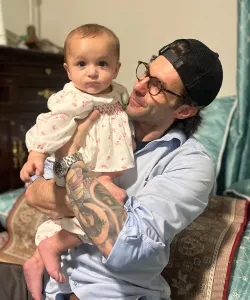
Patrick Johnson ‘26GS
Major: Creative Writing Fiction/Nonfiction & American Studies
Project: God Bless Us and Save Us and Spare Us from Paperwork: Inside the SIV System and the Unraveling of America’s Wartime Obligation
What led you to pursue your current research topic?
Broadly speaking, what first led me to pursue this research was experiencing its systemic dysfunction firsthand. My work emerged out of lived experience rather than abstract curiosity. As a former U.S. Army medic deployed to Afghanistan, I worked closely with Afghan interpreters whose labor was often indispensable to U.S. military operations, yet whose postwar treatment reveals deep structural failures in how the United States wages—and exits—the wars that it starts. Over time, what began as personal concern evolved into a broader historical and political inquiry: how the privatization of core military functions—especially since Vietnam and accelerating dramatically after 9/11—has reshaped government responsibility, accountability, and moral obligation.
As a U.S. citizen, veteran, and SIV case handler, I was both disturbed and dismayed by the bureaucratic hurdles that are part and parcel of the Special Immigrant Visa process itself. Having worked directly with two families who ultimately emigrated through this pathway, their experiences have continued to animate and sharpen my research questions.
Subsequent Office of Inspector General reports have only added to the richness of the documentary record, highlighting recurring failures of oversight, credibility, and moral responsibility—failures largely rooted in unaccountability. A close examination of the Afghan Allies Act—which has enjoyed rare bipartisan support and spanned six presidential administrations—reveals that the U.S. military’s expanding reliance on outsourcing and privatization, including the use of defense contracting corporations such as Mission Essential Personnel, LLC, is not an isolated anomaly but a symptom of a larger structural disease: the hollowing out of the public sector, the erosion of state capacity, and the weakening of oversight and vetting mechanisms in favor of speed, output, and profit. The result has been corruption in the field, diminished credibility at home and abroad, and, ultimately, a degradation of American combat readiness.
Tracing this arc—from World War II’s state-led mobilization to today’s contractor-dependent defense ecosystem—has allowed me to situate individual human stories within a much larger institutional, political, and economic framework, which has been both challenging and rewarding.
How will this research help you in advancing your academic and career goals?
This research has proven rigorous, expansive, and emotionally exhausting. Firsthand accounts require careful vetting for accuracy, and in the current climate of MAGA's fear-driven paranoia, earning the trust and cooperation of a targeted minority community is plainly more difficult. The initial interviews I’ve conducted have only reinforced for me that good journalism is hard earned and comes with a steep learning curve if not properly prepared. I’m hopeful that the trials and tribulations of this research project will meaningfully augment the investigative journalism skills I plan to pursue here at Columbia this coming fall.
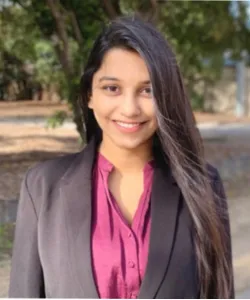
Debpriya Das ‘28GS
Major: Biological Sciences
Project: Can Heart Cells Fuse and Unfuse to Heal the Heart?
What led you to pursue your current research topic?
My interest in this research grew from a desire to understand why the human heart has such limited capacity to heal itself after injury. Cardiovascular disease remains the leading cause of mortality worldwide, and heart attacks result in the irreversible loss of cardiomyocytes, the cells responsible for heart contraction. Unlike many other tissues, adult cardiomyocytes cannot regenerate, and I was drawn to the fundamental biological question of why that is the case. My current project focuses on polyploidy, a state in which cardiomyocytes contain multiple nuclei or multiple copies of DNA, and how this cellular architecture influences growth, stress response, and regeneration. In the Ali lab, we have developed a novel mouse model enriched for mononucleated diploid cardiomyocytes, allowing us to directly test how maintaining a simpler nuclear and genomic state influences growth and function of cardiomyocytes. In parallel, I am studying cardiomyocyte cell fusion as a possible protective or adaptive mechanism following myocardial infarction, when surviving cells must compensate for extensive cell death.
How will this research help you in advancing your academic and career goals?
This research is central to my long-term goal of becoming a physician-scientist. Academically, it has given me rigorous training in experimental design, advanced imaging, and quantitative analysis, while also teaching me how to ask mechanistic questions. From a career perspective, this work has reinforced my commitment to medicine, and my interest in cardiology. Moreover, I aim to publish findings from this project and to continue presenting my research at regional and national conferences. The process of writing manuscripts, preparing abstracts, and presenting data has strengthened my scientific communication skills, which is an essential competency for a future physician who hopes to bridge research and patient care.
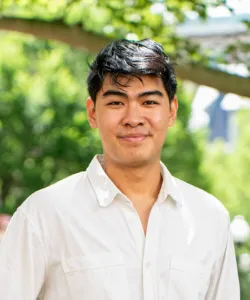
Glenn Paul ‘27GS
Major: Sociology
Project: The Price of Letting Go: How Social Saunas Package Emotional Release as an Experiential Commodity
What led you to pursue your current research topic?
I’ve always been drawn to what people do outside of work and home. Leisure might seem trivial, but it’s actually one of the best ways to understand who we are and what kind of society we’re living in, what we value, how we connect, and who feels included or excluded in public life.
While exploring the wellness world, I stumbled upon the rapidly growing phenomenon of social saunas and immediately found them sociologically fascinating. These aren’t just passive free-flow places to relax; they present a highly structured, guided group experience where strangers journey through heat, cold, music, and reflection together, often led by a facilitator toward a shared emotional goal. In a time when many people feel isolated, overstimulated, and disconnected, I was struck by how these spaces promise something we seem to be missing: shared ritual, emotional release, and a sense of belonging.
My research looks at how these experiences actually work. I’m interested in how emotion is guided, how vulnerability is encouraged, and how participants learn what it means to “open up” or “heal” in a collective setting. What intrigued me most was the timing. We live in a hyper-optimised, secular, digital world where traditional rituals have largely disappeared, yet here are new ones emerging—carefully designed, emotionally guided, and offered through the wellness market.
I hope to understand what this says about how people are feeling today, how we’re learning to process emotion together, and why we’re turning to these kinds of curated experiences to meet needs that were once fulfilled by community, religion, or shared social life.
How will this research help you in advancing your academic and career goals?
This project lays the groundwork for the kind of research I hope to pursue over the long term. Academically, it deepens my training in urban and cultural sociology and prepares me for advanced graduate study focused on leisure, emotion, and ritual. It also allows me to strengthen core research skills and translate lived experience into insight about contemporary social life.
The Bancroft Research Scholar Program makes this work possible in a meaningful way. The support provides the time, resources, and independence needed to conduct careful, ethically grounded research. I am deeply grateful for the opportunity to pursue this project with the rigor it deserves, and for the confidence the scholarship places in undergraduate research.
As a Singapore Tourism Board Scholar, I am also deeply interested in how curated experiences shape emotion, memory, and connection. This project allows me to bring sociological thinking into the world of experience development by examining how intentionally designed environments and guided rituals help people reconnect with themselves and with others, in our increasingly isolated and digital world. It supports my broader goal of understanding how people seek meaning and connection in contemporary social spaces, while developing the skills needed to analyze how these experiences are deliberately designed.
About the Bancroft Research Scholars Program
The Bancroft Research Scholars Program aims to provide GS students with the opportunity and funding to participate in undergraduate research during the regular school year. The Program selects a limited number of GS students who collaborate with a Columbia faculty member on a research project during the academic year. Each scholar receives $2,200 in funding for one academic term to support their research efforts. This support helps cover essential research-related expenses, including supplies, materials, and travel costs, ensuring that scholars can fully immerse themselves in their projects without financial barriers.