
Paying it Forward: How Gulnazik Bakhramova ‘27GS is Empowering Fellow Kyrgyz Youth Through Education and Leadership
Through her nonprofit Kel Chai Ich—complimented by Projects for Peace and Social impact Fellowships—Bakhramova is uplifting the next generation of global scholars.

On her first extended trip outside of her hometown of Kerben, Kyrgyzstan—tucked into a northwest corner of the country with a population of less than 20,000—Gulnazik Bakhramova ‘27GS didn’t go to the next town over, or even to her country’s capital (except to catch a plane!). Instead, the then-high schooler crossed half a continent and a whole ocean to study abroad in the California Bay Area.
Bakhramova describes her study abroad experience, which was part of the unique U.S. Department of State Future Leaders Exchange (FLEX) program, as “transformational.” It set her on the path to higher education, first at the College of San Mateo and now at Columbia GS. It also inspired her to create innovative educational programming of her own. Through her nonprofit Kel Chai Ich, Bakhramova aims to increase access to educational literacy and opportunities among fellow Kyrgyz youth, with a special focus on young women and rural students.
Kel Chai Ich—which literally translates as “come drink tea”—“was born out of the belief that every young woman deserves the opportunity to define success on their own terms,” said Bakhramova. “It’s a space where young women can share their dreams and discuss barriers that are often unspoken. Particularly in this project, we try to address the systemic and cultural challenges that prevent young women in rural areas of Kyrgyzstan from accessing higher education.”
“[Kel Chai Ich] was born out of the belief that every young woman deserves the opportunity to define success on their own terms.”
Bakhramova, of course, is especially equipped to navigate these challenges as someone who has faced—and overcome—them. She spent years confronting gendered expectations and familial hesitancy. “It took me three years to negotiate my trip to the U.S.; I applied to the FLEX Program for three years and it was only in the third year I convinced my dad to let me go,” she shared with a wry but fond chuckle.
Still, Bakhramova is quick to articulate that families are not the villain of this story. “There are so many complex cultural norms and safety concerns,” she said. Kel Chai Ich takes a pro-active approach by directly connecting with students’ families, a strategy that not only has practical benefits, but also respects the centrality of family to Kyrgyz culture and opens the door to long term, sustainable cultural change. Bakhramova proudly reported that word-of-mouth from Kel Chai Ich participants has indicated that many participating families have shifted their perspective through their engagement with the organization.
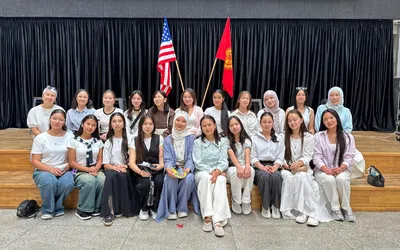
The heart of Kel Chai Ich’s programming, however, is the community-building and education accessed by student participants. Through a summer intensive, students learn about the various pathways, educational or otherwise, available to them as they map out their futures. The summer program culminates in a fully-funded trip to Bishkek, the capital of Kyrgyzstan, and visits to college campuses in the city.
Students are also connected during and after the program to mentors and guest speakers, often Kyrgyz college students who are both invaluable sources of experiential knowledge and living proof that successfully pursuing higher education is far from impossible. “The biggest motivation of this program is for the students to gain confidence,” said Bakhramova. “Technical knowledge is great, but it’s more about [them gaining] the confidence that they can do it.”
That’s a confidence Bakhramova herself had to grow regarding her leadership of Kel Chai Ich. This summer, she got some help from two fellowship experiences that she integrated into her Kel Chai Ich work: Projects for Peace and the Columbia Social Impact Fellowship. “Just applying for Projects for Peace,” which is a grant supporting local community-centered initiatives addressing global issues, “helped me reflect on a lot of things about Kel Chai Ich and its actual purpose,” said Bakhramova. Meanwhile, “the Social Impact Fellowship was really focused on my individual leadership style and developing my personal skills,” abilities that Bakhramova was able to build alongside fellow Columbia students pursuing long term community impact.
Bakhramova shared that the fellowships helped her engage critically with two main goals of Kel Chai Ich: increasing reach and sustainability. She is particularly interested in de-centralizing the change that Kel Chai Ich can make by increasing local and organizational collaboration—for instance, recruiting local educators to continue mentorship year-round and building relationships with government partners.
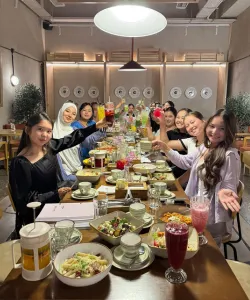
She was also really struck by the unexpected parallels and solidarity she found among her fellowships peers. “Sometimes our projects would be insanely similar,” she said. “It made me realize that we are in different countries but why are we facing exactly the same issues?” She added, “we can be so different, but the drive we have is so similar.”
Even as her fellowships and Kel Chai Ich work fed into each other, juggling so much in one summer was no small feat. Luckily, Bakhramova had support. “I’m especially grateful for the incredible support from the Undergraduate Research and Fellowship team,” she said. “They helped me tremendously, not only with grant writing and multiple drafts, but also with navigating many challenges during the program this summer.”
Bakhramova’s fellowship journey is far from over: she was just named a 2025-2026 Millennium Fellow. This semester-long leadership development program will further strengthen her social impact and community-building skills, and support her short term goal of expanding Kel Chai Ich’s programming across Kyrgyzstan and other Central Asian countries.
As she herself flourishes as a scholar, Bakhramova is already paying it forward by tirelessly working to ensure that an even bigger next generation of students is empowered to take the road less traveled. Through her work, and her story, Bakhramova aims to inspire others around a straightforward shared purpose: to increase “equitable education, not just in Kyrgyzstan, but around the world.”