
The Path to Fulbright: Q&A with Matthew Oey ‘24GS
From GS to Milan and then Harvard Law, Matthew Oey ’24GS shares how Columbia prepared him to chase ambitious academic goals across disciplines and the globe.
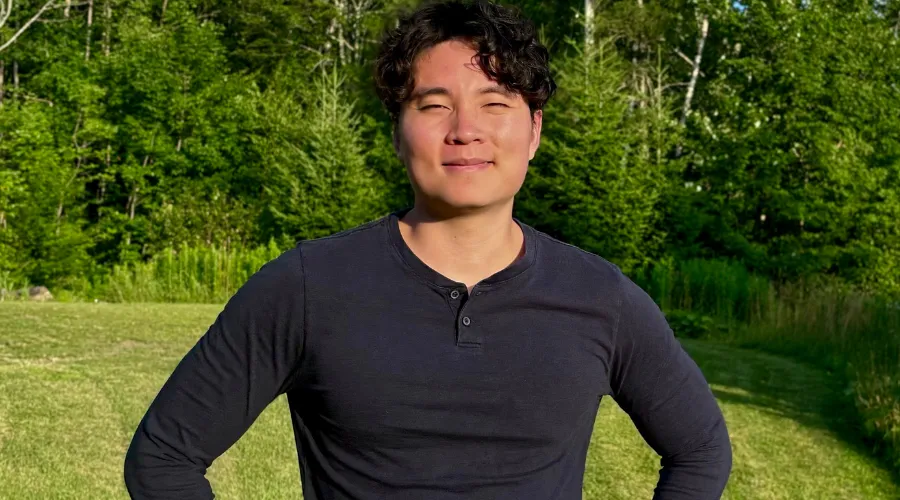
Matthew Oey ’24GS has long been fascinated by the intersections of history, identity, and global perspective. Raised in Singapore and Vermont, he often traveled with his family’s publishing business, an experience that immersed him in diverse cultures and sparked curiosity about the world around him.
At GS, he majored in history and was a research assistant at SIPA, working on projects with Professor Stuart Gottlieb and former U.S. National Security Advisor Robert O'Brien. After graduating from Columbia, he published “Reimagining Singapore’s History” (Penguin Random House SEA), an essay collection featuring leading historians on how the nation's narrative has evolved over recent decades.
As a 2025 Fulbright recipient, Oey will pursue an MBA at Milan’s Bocconi University, studying how the business world operates within Italy’s unique cultural and economic landscape. He’ll then continue to Harvard Law School to explore the intersections of academia and international and financial law.
He spoke with us about the path to Fulbright and how Columbia empowered him to chase big ideas across disciplines and borders.
What does being awarded a Fulbright mean to you, and how do you see it shaping your global perspective?
I grew up a mixed-race kid in Singapore, alongside my family’s American publishing business, Tuttle Publishing, which specializes in cultural books on Asia for English audiences. My parents’ work took us on frequent trips to Indonesia, Japan, and the U.S., with stopovers in Europe to attend the Frankfurt, Bologna, and London book fairs.
Cross-cultural exploration has thus always been a big part of my life growing up and a big source of inspiration for my intellectual curiosities. My first research publication in college was a history of cross-cultural anthropology during WWII, focusing on Columbia anthropologists Ruth Benedict and Margaret Mead. Since joining the family publishing house as an editor, one of my earliest acquisitions was a new edition of Ruth Benedict’s study on Japan, “Chrysanthemum and the Sword,” which recently entered the public domain.
In many ways, the Fulbright feels like a very natural extension and affirmation of my long-time interests in cultural exchange. However, that experience has primarily orbited around Asia and America, the geographies tied to the family business and my Eurasian heritage. On our occasional stopovers in Europe, I always found myself drawn to its history, culture, and languages. In college, I had the opportunity to learn Italian for four years and took many classes on modern European history. But the Fulbright will be my first experience properly living there for an extended period.
I think that the European Union occupies a very interesting place in the world today—in a sense caught between the politics of America, Russia, and East Asia, but also still a major and important player in its own right. I am looking forward to learning more about post-2022 European politics, the Euro currency system, its stagnating economies, and the problems facing its youth today. I think these are important perspectives for understanding the whirlwind of global issues that my generation is coming of age into.
How did your time at GS and Columbia support your academic goals and prepare you for where you are today and where you’re heading next, from the Fulbright and beyond?
Columbia was truly one of the most fun, intellectually-stimulating, and transformative experiences of my life—sorry to all my friends and family who have heard this spiel a hundred times! Whenever I meet up with college friends, we reminisce on how much fun we had at Columbia just learning—reading, researching, taking classes on a bunch of random subjects that you did not even know existed, but now can’t stop talking about.
I met amazing professors—I am especially grateful to Adam Tooze, Sumati Dwivedi, Paul Chamberlin, Matthew Jones, and Frederica Franze—who introduced me to whole worlds I didn’t know existed and completely changed my perspective on life. Despite majoring in history, I was provided grants to do research across a variety of fields, from anthropology to political science, covering topics from the Sicilian mafia to feminist and gendered analyses of nuclear strategy, to war memorials in Washington, D.C. I worked as a research assistant to Professor Stuart Gottlieb on publications related to counter-terrorism; I also joined Hillary Clinton’s brand-new think tank, the Institute of Global Politics, where I assisted ex-National Security Advisor Robert O’Brien with a study on America’s presidential envoys. Both were amazing experiences under great mentors.
The best part of Columbia was the sheer breadth of perspectives and opportunities.
The best part of Columbia was the sheer breadth of perspectives and opportunities. For any random permutation of ideas/topics you could conjure up, there were probably other people at the university on the same wavelength, and you were encouraged and supported to go out and research it, no matter how niche and out-there your ideas were.
My big takeaway from Columbia was that efficient learning is an art. Like many other mid-twenties college graduates, I have no idea where the future will take me. I have pursued work and opportunities across publishing, academia, law, and finance. In whatever strange combination of those spaces I end up in, I am confident in my ability to pick up new concepts quickly, and forever grateful to Columbia for spurring my intellectual curiosities across a wide range of subjects.
Post-Fulbright: what excites you most about combining your history and business education with legal studies at Harvard Law School?
During my senior year, I became really invested in financial and business history. There is a fantastic book on the Morgan family and their banking empire by Ron Chernow, the same author of the Alexander Hamilton biography that was adapted into the hit Broadway show by Lin-Manuel Miranda. Chernow illustrates how the Morgan bank furtively influenced both the creation of America’s financial system—which codifies international finance today—and major global events. They made their initial fortune selling war bonds to France during the Franco-Prussian War in 1871, served as America’s ad hoc “Federal Reserve” until it was invented in 1913 (literally to fill the role of JP Morgan in the economy), and were the primary financiers to Germany, Italy, and Japan during the inter-war period, just to name a few highlights in this crazy story. Chernow’s “House of Morgan” opened up for me this fascinating intellectual space that intertwines history, finance, and law.
At Harvard, I plan to pursue international and financial law, and within the latter I am most drawn to antitrust, securities, and financial institutions. All of these fields are becoming increasingly interdisciplinary. In antitrust jurisprudence, for example, there is a big schism between the “Neo-Brandesian” school of thought and the Consumer Welfare Standard popularized by Robert Bork. The former is rooted in a historical revival of Supreme Court Justice Louis Brandeis (who made his name as an anti-JP Morgan trustbuster, funnily enough), while the latter is an economic theory inspired by Chicago Neoliberalism. Getting into the weeds of this debate means understanding both schools of thought, their intellectual histories, and the development of America’s financial institutions.
Harvard has fantastic interdisciplinary offerings in these fields that combine resources from its business, law, and graduate schools. I am particularly excited about exploring antitrust jurisprudence, the legal history of financial institutions, and the Law and Business Program of Study.
What advice would you give to fellow GS’ers who are considering pursuing a Fulbright?
I give this advice for writing in general, but I think it especially applies to the Fulbright — start as early as possible and write lots of drafts! Writing is an iterative process, and it takes time to get right. Once you pen something down, you can then visualize better ways of articulating what you want to say. Often, written material just needs time to sit and ferment so that you can return to it from a new angle. Start early, let the ideas sit, and keep coming back with fresh eyes.
Also, take full advantage of the Undergraduate Research and Fellowships (URF) office and listen very carefully to what they have to say. They are all super experienced, extremely kind and helpful, and have great insight into seemingly inconsequential details that can matter a lot in your application, from basic formatting to the sequence of ideas in your written material. They gave me tons of useful feedback that I think really pushed me over the edge in the selection process.