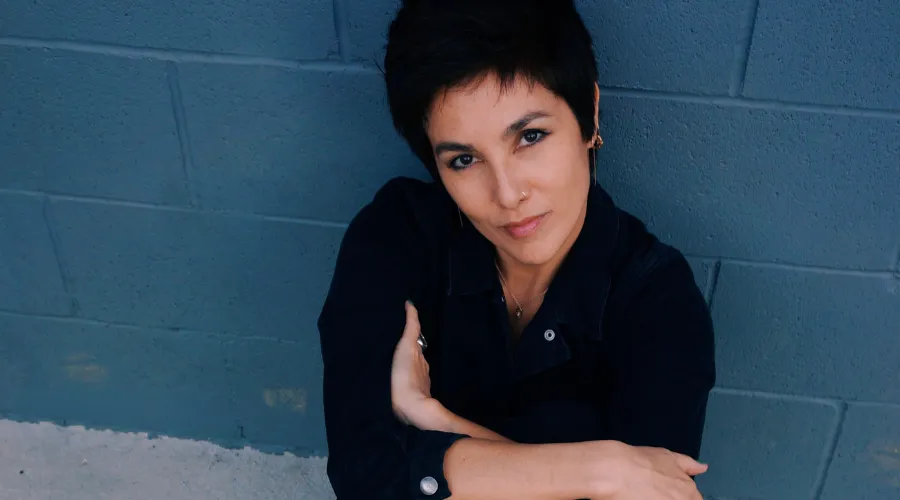
“At GS I was in a period of deep learning and creative expansion,” says Osterweis, who received her BA in anthropology. “I had incredible professors who grounded me in sociocultural theory, ethnographic research, and writing that really pushed the boundaries…I was able to apply anthropological methods and concepts to queer subversive cultures of performance.” Under advisors Michael Taussig and the late Elaine Combs-Schilling, Osterweis completed an honors thesis that became the seed for her research as a PhD student in performance studies at UC Berkeley and, eventually, a book: Body Impossible: Desmond Richardson and the Politics of Virtuosity, due out this year from Oxford University Press.
Osterweis writes for a wide range of peer-reviewed journals, makes and appears in performances, and cares for her three children, all while teaching CalArts students, whom she loves for their “radical creativity.” And because the GS experience allowed her, a nontraditional student, to tap into her own burgeoning creativity, Osterweis remains a passionate supporter of the school. “I’d especially love to support students of color, queer and trans students.” These students are more likely to operate in what anthropologists call “liminal spaces” or what is called “betwixt and between.” As a queer and mixed-race person working in multiple disciplines, Osterweis is deeply familiar with this state of being, moving through the world with ease in certain settings and experiencing exclusion in others. But, as her career shows, the in-between space is also a fruitful place from which to dance, make performances, and create language to explore the nuances of identity and performance.