
Continuing the Mission: One Veteran’s Journey to Help Fellow Service Members with PTSD
Through research and lived experience, Army veteran Josh Park ‘24GS, ‘26TC is helping break barriers in veterans’ mental health and the understanding of PTSD.
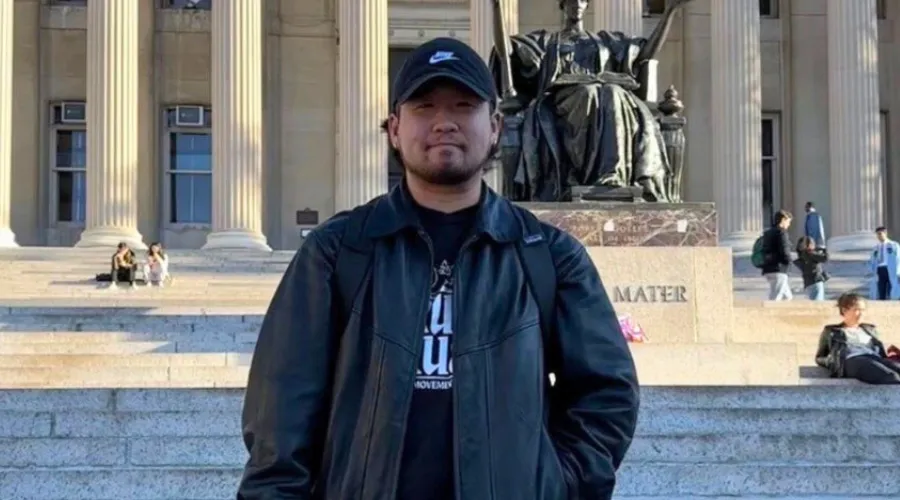
When Josh Park ‘24GS, ‘26TC first stepped onto Columbia’s Morningside Heights campus in early 2021, the winter chill and Manhattan skyline were a far cry from the military bases and California sun he’d grown accustomed to. The feeling was “pretty surreal,” he recalled fondly. His transition to New York City and academia wasn’t just a change of pace. It signaled a new mission and sense of purpose; to heal the invisible wounds he witnessed first-hand among his fellow service members.
That mission began three years prior to that cold January day, as Park was preparing to leave active duty in the U.S. Army. A friend, fellow service member, and Columbia graduate, told him: “Hey, I think you should check out Columbia GS, I think that you'd be a good fit.”
So he did.
“And the rest is history,” Park said, smiling at the memory.
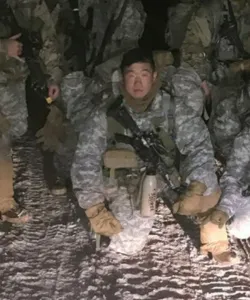
Before coming to GS, Park had already built a strong record of service—one rooted in family legacy. “I come from a long lineage of military service,” he said. “My grandfather, father, brother, and I have all served as infantrymen in the Army.” Continuing that tradition, Park enlisted in the Army at 18, spending two years in the South Carolina National Guard before serving three years of active duty at Fort Drum as an Infantryman. He later joined the Army Reserves as a Counter-Intelligence Agent in California.
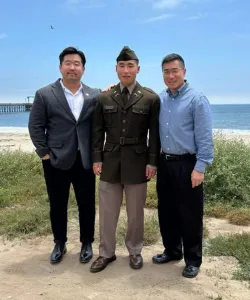
These years in the Army shaped Park in many ways; the toll of service became the foundation of his purpose. “I was in the military for eight years and over the course of those eight years, I attended over 10 funerals of friends from the military.” Park said quietly. “That’s really the big drive for me—just wanting to make a difference and trying to contribute meaningfully back to the veteran community.”
Like many veterans, Park faced a jarring shift when leaving active duty. “I didn’t really have a support system in New York City,” he recalled. “But I found that through the military veteran community at Columbia.”
That community not only gave him belonging but also inspired him to build one of his own: CU Barbell, a competitive weightlifting club that went on to win two consecutive Ivy League titles. CU Barbell became both a physical outlet and an emotional anchor for Park—a place to rebuild the camaraderie and confidence he’d experienced in the Army.
Still, the most transformative part of Park’s story began in the classroom. Originally a computer science major, he switched to psychology late in his junior year, an anecdote that never fails to elicit an “Oh, wow” from those he tells.
“Yeah, that's what everyone says. It was definitely a pretty drastic switch,” Park said with a quickly-fading smile.
As pivotal as this switch was to Park’s story, it carried the weight of loss, yet was also a beacon of purpose—a determined effort to find meaning after saying goodbye to too many friends in uniform. “That's what pushed me to study psychology and make an impact,” he said. “I've always had an interest in psychology from being in the military, but I think those life events really solidified that and gave me the push to make the career switch.”
“That’s really the big drive for me—just wanting to make a difference and trying to contribute meaningfully back to the veteran community.”
What followed was a new spark of determination. After changing majors, Park wasted no time immersing himself in research. He scoured Columbia’s psychology labs, cold-emailed professors and principal investigators, and introduced himself with a genuine eagerness to contribute and learn. “It’s not the normal route,” he laughed.
But it worked.
By his senior year at GS, Park was contributing to two psychology labs—one examining PTSD in veterans and civilians, and another, the Couples Lab, studying emotional responses to the 2024 presidential election. These hands-on experiences laid the foundation for where he is now—a clinical research coordinator at the James J. Peters VA Medical Center in the Bronx. In this role, he’s come full circle: turning the losses he experienced into tangible healing for others.
At the VA, he works in the Yehuda Lab within the Parsons Research Center for Psychedelic Healing, supporting a groundbreaking MDMA-assisted therapy program for veterans with post-traumatic stress disorder (PTSD). The treatment pairs traditional talk therapy with controlled doses of MDMA (often known as ecstasy or Molly) to help participants process deeply buried trauma. Park has been with many of his study participants from their first phone screening through their post-treatment integration sessions. “It’s pretty meaningful being able to witness the actual change that you’re making in someone else’s life,” he explained.
For non-veterans, it can be hard to grasp the invisible battles many service members face after leaving the military. Park’s research sheds light on those struggles and on one particular belief that often keeps veterans from seeking help: that it’s a shameful sign of weakness. “There's that underlying stigma that seeking help is frowned upon,” he said.
Comparisons to older generations of veterans (such as those who served in the Vietnam War, for example) can also prevent newer veterans from seeking help. “Just because they didn’t go there, they might think that they’re undeserving of treatment,” explained Park. Breaking the cycle of shame—and helping others feel deserving of care—has become central to Park’s mission.
While working full time at the VA, Park is also pursuing a master’s degree at Teachers College, aiming to become a clinical psychologist and help veterans heal the way he’s seen others begin to do through his research. “I’ve seen firsthand what PTSD does to people in the military,” he said. “It's made me more empathetic and given me more of a drive.”
Park’s mission didn’t end when he left the Army—it evolved. Now, through psychology and research, he continues to serve with purpose and compassion. And along the way, strives to prove that healing isn’t a sign of weakness, but an act of courage.